
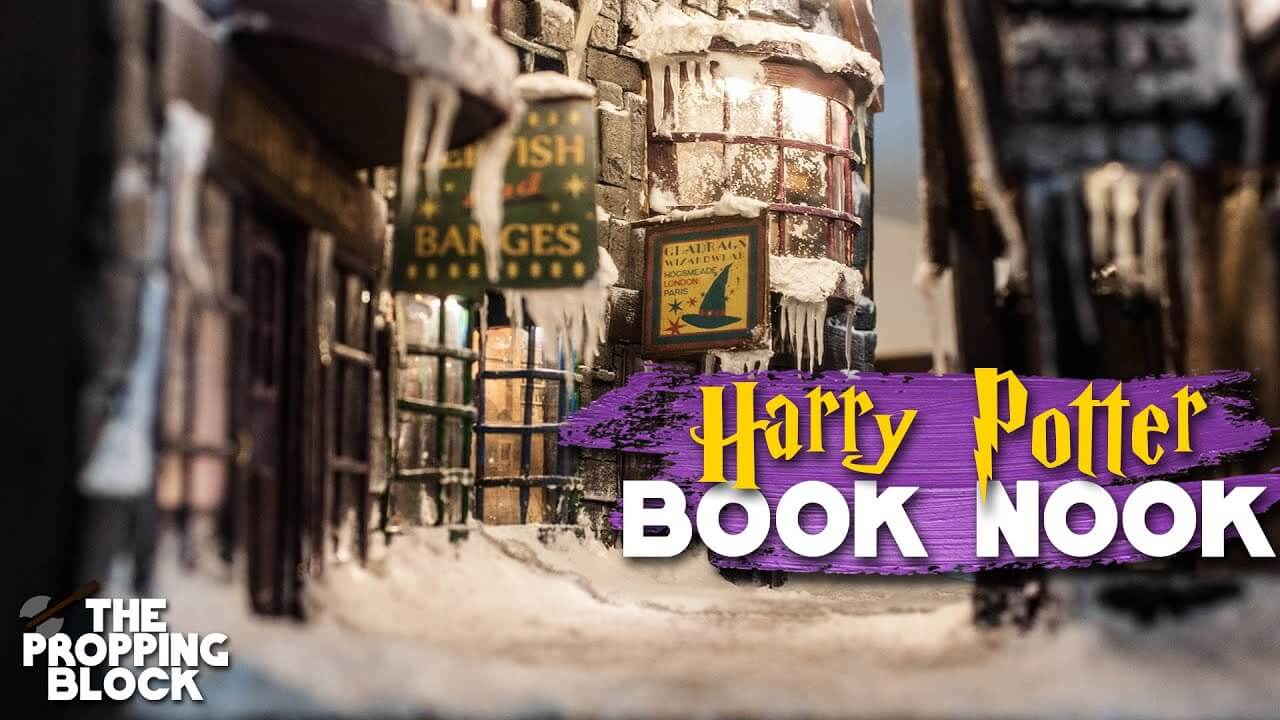
A Harry Potter book nook is more than just book decor, it’s a miniature world that captures the charm, nostalgia, and magic of the Wizarding World. Whether it’s Diagon Alley glowing at dusk or Platform 9¾ ready for departure, each book nook is handcrafted with hours of dedication and creativity.
Today, we take you behind the scenes to explore how a Harry Potter book nook is made, step by step.
How a Harry Potter Book Nook Is Made?
1. It Begins with Imagination
Before any tools come out, the creator steps back into J.K. Rowling’s universe, revisiting scenes from the books and movies.
Common inspirations include:
- Diagon Alley’s iconic shop fronts
- Hogwarts hallways and classrooms
- Dumbledore’s mysterious office
- The Hogwarts Express on Platform 9¾
- The Forbidden Forest
Artists sketch initial concepts, choose the perspective, and determine how much detail the miniature will include. This planning ensures the final piece transports viewers straight into the scene.
2. Designing the Layout
Once the idea is clear, makers begin designing.
This includes:
- Floor plan layout
- Scale measurement for miniature props
- Wall and structure placement
- Lighting positions
- Viewing angle for maximum immersion
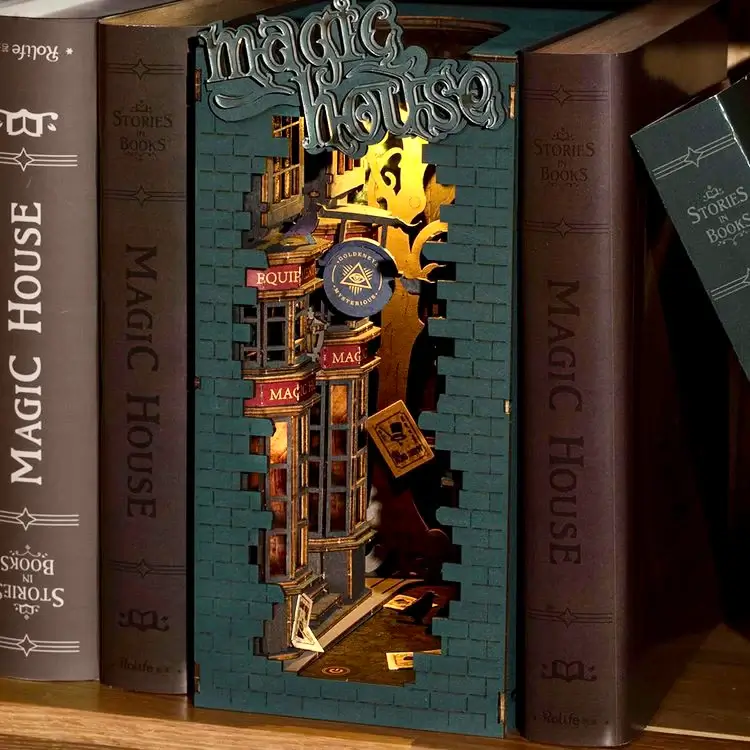
Some creators use digital modeling tools, while others prefer hand-drawn blueprints. Either way, the design stage ensures the nook fits perfectly between standard books while maintaining full visibility of the scene.
3. Crafting the Miniature World
This is the most creative part of the process.
Materials Used
A typical Harry Potter book nook uses:
- Wood or MDF board (for the frame)
- Foam board or PVC sheets (for walls and floors)
- Polymer clay (for tiny props)
- Resin (for windows or potion bottles)
- Acrylic paint (for textures, bricks, and weathering)
- Clear plastic sheets (for glass effects)
Miniature Props & Details
Every miniature prop is crafted by hand, often under a magnifying light.
Tiny movie-accurate details include:
- Wand boxes at Ollivanders
- Mini books from Flourish & Blotts
- Cauldrons, potion bottles, and floating candles
- Hogwarts house banners
- Stone textures and enchanted lanterns
These details are what make each book nook truly magical.
4. Lighting: The Magic Touch
Lighting transforms the diorama into a living scene.
Makers use LED strips, micro-LEDs, or USB-powered lights to create effects like:
- Lantern glows in Diagon Alley
- Candlelight flickers in Hogwarts
- Purple mystical glows in spell rooms
- Soft warm lights mimicking evening scenes
Wiring is carefully hidden in walls and floors to keep the illusion intact.
5. Painting and Texturing
Painting is where the miniature comes to life.
Creators use techniques such as:
- Dry brushing for stone and brick textures
- Shading for depth and aging
- Weathering for old, magical environments
- Metallic accents for enchanted objects
This step adds realism and character to every corner.
6. Final Assembly
All crafted pieces are then assembled with precision.
Artists install:
- Walls and floors
- Props and shop signs
- Windows, doors, lanterns
- Characters and magical creatures
- Lighting components
- Glass or acrylic front panels
Once assembled, the scene becomes a full miniature world hidden between books.
7. Quality Check & Packaging
Because book nooks are delicate, creators carefully check all components before shipping.
Packaging includes:
- Foam padding
- Protective film
- Custom-fit boxes
- Care instructions
Many makers add a thank-you note or lore card explaining the story behind the scene.
Why Harry Potter Book Nooks Are Special?
A Harry Potter book nook isn’t mass-produced decor, it’s a handcrafted collectible. Every piece tells a story, every detail adds emotion, and every light brings the magic alive.
For Potter fans, it’s like having a secret portal to the Wizarding World tucked between your favorite books.